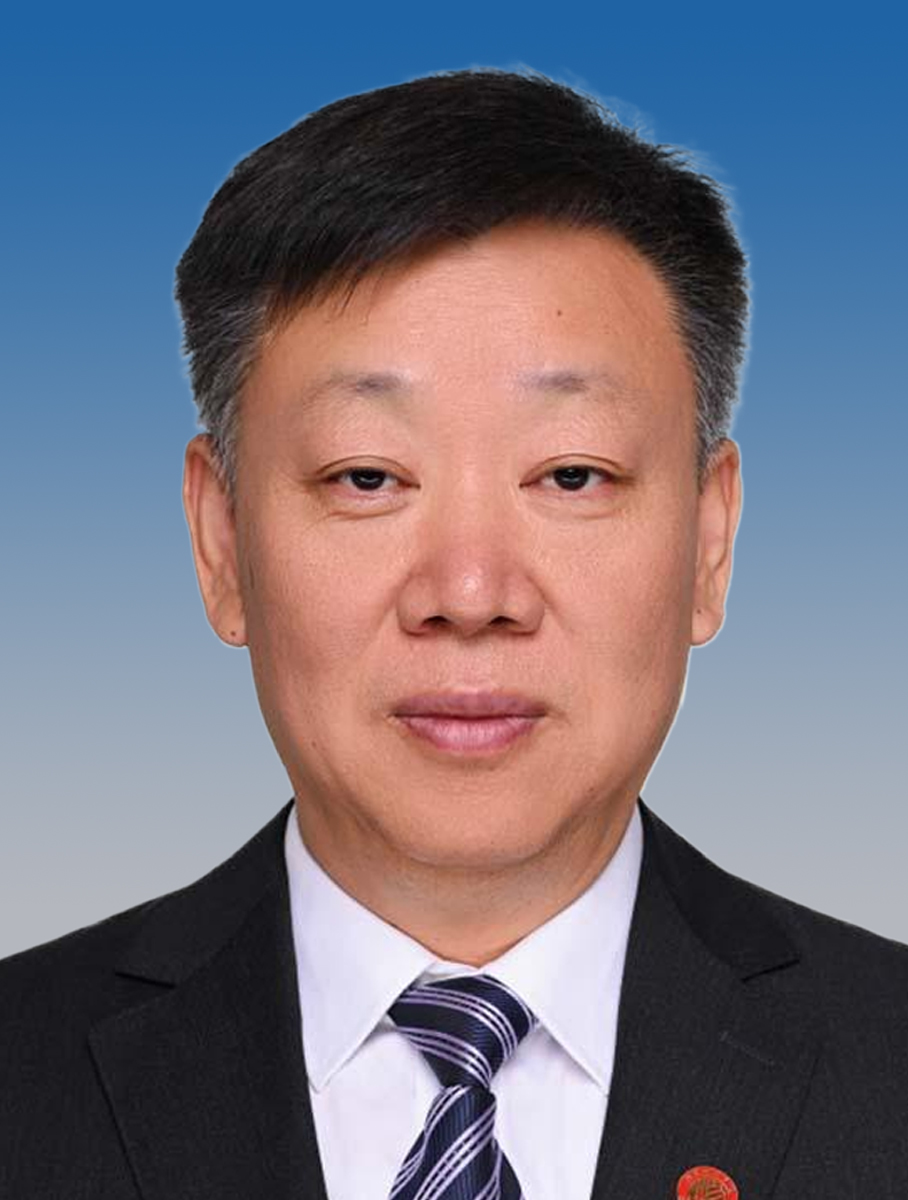
Prof. Min Zuo
Professor, Doctoral Supervisor, Deputy Secretary of the Party Committee and President of Beijing Wuzi University, ChinaSpeech Title: Business Innovation and Development in the Big Data Era
Abstract: Focusing on business development logic in the big data context, this presentation regards artificial intelligence as the core driving force of commercial technological innovation. It elaborates how innovative commercial technology applications activate new quality productive forces, reshaping operational modes, supply chains and consumption scenarios of modern business. Combined with Beijing’s practical construction as a benchmark city for digital economy and an international consumption hub, it analyzes realistic paths of digital business transformation, summarizes industrial upgrading opportunities brought by big data and AI, and puts forward practical suggestions for enterprises to realize sustainable innovative development under digital trends.
Biography: Prof. Min Zuo is Deputy Secretary of the Party Committee and President of Beijing Wuzi University. He is a distinguished council member of the Chinese Association for Artificial Intelligence (CAAI), where he also serves as Vice Chair of the Intelligent Services Professional Committee. He is a member of the E-commerce Teaching Steering Committee of the Ministry of Education, a standing expert on the Food Safety and Information Traceability Expert Committee of the China Subsidiary Food Circulation Association, and an active member of the Beijing Agricultural Informatization Society.
Prof. Zuo is internationally recognized for his work in AI-enabled food safety supervision. He spearheaded the development of China’s National Food Safety Sampling Inspection Platform and the Cosmetic Industry Chain Big Data Platform—systems that demonstrate how intelligent informatics can strengthen public health governance. His research integrates complex systems modeling, big data mining, and regulatory science to address critical challenges in supply chain transparency and risk assessment. As a highly prolific scholar, Prof. Zuo has led more than 10 national research projects and authored 60+ papers, 1 monograph, and 3 textbooks. He is a recipient of two Beijing First-Class Teaching Awards and has cultivated a new generation of researchers through his supervision of doctoral and master's students. His keynote will draw upon his extensive experience in deploying large-scale intelligent systems, offering insights into the future of data-driven regulation.

Prof. Claudia Loebbecke
Chair of Media and Technology Management, University of Cologne, GermanySpeech Title: AI as a Structural Force: Rethinking Value Creation in Business, Media, and Academia
Abstract: Artificial intelligence (AI) has evolved from a source of competitive differentiation into a pervasive force reshaping economic systems, educational institutions, managerial practices, and everyday human behavior. As AI diffuses at unprecedented speed, competitive advantages erode rapidly. What once distinguished early adopters is quickly becoming a baseline capability. Against this backdrop, the keynote examines the evolving intersection of business and AI. It critically explores how AI transforms mechanisms of value creation and institutional practices across business, society, media, and academia. In doing so, it seeks to stimulate a forward-looking discussion on how organizations and institutions can harness AI's potential while simultaneously cultivating resilience, strategic adaptability, and long-term sustainability.
Biography: Claudia Loebbecke has held the Chair of Media and Technology Management at the University of Cologne, Germany, since 2000. She served as President of the Association for Information Systems (AIS) from 2005 to 2006 and was named an AIS Fellow in 2012 and a Distinguished Member cum laude in 2019. She is a long-standing member of the European Academy of Sciences and Arts, the European Academy of Sciences, Beta Gamma Sigma, the Fulbright Alumni Network, and EU High-Level Groups on Policy Innovation, in particular on Accelerating Technology Transition. After nearly 20 years as Senior Editor of the Information Systems Journal and the Journal of Strategic Information Systems, she now serves as an Honorary Board Member of three leading journals, contributes to several editorial boards, and reviews extensively for academic conferences. She held appointments at INSEAD, McKinsey & Company, Hong Kong University of Science and Technology, Erasmus University Rotterdam, and Copenhagen Business School, as well as visiting positions at MIT, the London School of Economics, Paris Dauphine University, Bentley University, and the University of New South Wales. Her advisory and board roles include Johannes Kepler University Business School in Linz, Austria (since 2025), the regional public broadcaster WDR (2016–2024), Fraunhofer IAIS for KI/AI.NRW (2019–2022), and the Leibniz Information Centre for Economics (2012–2020). She holds a Ph.D. and a Master’s degree from the University of Cologne, as well as an MBA from Indiana University. Her research focuses on digital business models, media and technology management, regulatory issues, and emerging technologies, including artificial intelligence. She has published nearly 300 peer-reviewed journal articles and conference papers.
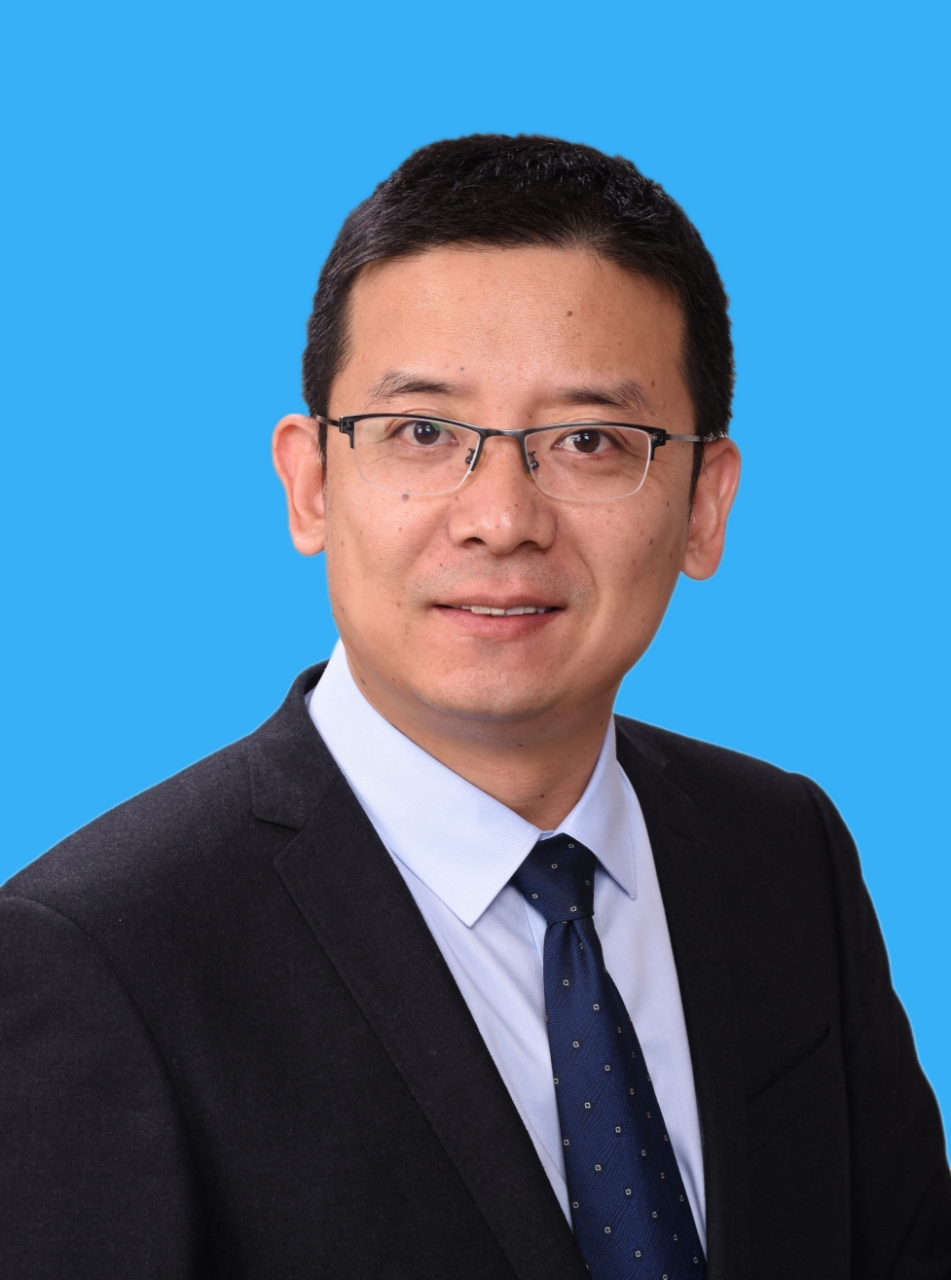
Prof. Hua Wang
Professor and Doctoral Supervisor, Vice Dean of the School of Foreign Studies, Xi’an Jiaotong University, ChinaSpeech Title: Digital Technology Empowering Full-Chain Collaboration in Cross-Border Trade: Model Reconstruction, Technical Paths, and Operational Quality and Efficiency
Abstract: The study investigates digital empowerment for full-chain cross-border trade collaboration from three perspectives: model reconstruction, technical pathways, and operational quality and efficiency. To address traditional collaborative barriers, it constructs an OBM multi-domain data collaboration model to restructure commercial flow, logistics, capital flow and information flow. Combined with a one-stop government-enterprise collaboration model integrating governmental and market services, two sub-modes are formed: cross-scenario full-chain collaboration and multimodal transport collaboration. An integrated technical system covers basic data collaboration, full-chain efficiency optimization and full-chain supervision. Four core technologies lay a standardized, trusted data foundation. Centering on transactions, logistics and payment, carbon footprint monitoring, multimodal transport optimization and property right credit-based supply chain finance improve efficiency and value. Dynamic credit and risk assessment establishes a “credit-driven + risk warning” supervision framework balancing compliance and services. Digital transformation enhances efficiency, cost control and risk prevention. It speeds up document processing and official reviews and realizes automated route planning. Automation, logistics optimization and compliance reminders lower costs and social resource consumption. Full-chain risk management and cross-border data security technologies boost anomaly detection and guarantee secure collaboration.
Biography: Wang Hua, Professor and Doctoral Supervisor, serves as Vice Dean of the School of Foreign Studies, Xi’an Jiaotong University. His research focuses on the digitization and facilitation of international economy and trade. He is the Chief Scientist of a National Key R&D Program Project, a recipient of the Provincial Leading Talents Program, a consulting expert of the Shaanxi Provincial People’s Congress, and an expert committee member of the Shaanxi Sub-council of the China Council for the Promotion of International Trade. He has published 56 papers in core domestic and international journals indexed by SSCI, CSSCI and other prestigious databases. He has presided over 22 research projects at the major national and key provincial/ministerial levels.

Dr. Adela Lau
Deputy Director of HKU SAAS Data Science Lab, Division of Statistics and Actuarial Science, School of Computing and Data Science, The University of Hong Kong, Hong Kong, ChinaSpeech Title: Wisdom Management with AI, Data Science and Big Data Analytics
Abstract: Knowledge management focuses on the processing of information acquisition, analysis, organization, dissemination, sharing, and visualization. It only emphasizes on the processes of information management and filtering in a structured manner. It does not filter and extract information based on the context, and does not generate intelligence internally for filtering the useful data for analysis and comparison to make an optimal solution. Therefore, this presentation will present the limitations of the existing knowledge management methods, and discuss how to use AI, data science and big data analytics to make an artificial conscious agent to feel, self-aware and use its inner experience and problem context to filter and extract the useful information for analysis and decision making.
Keywords. Wisdom management, AI, data science, big data, artificial conscious agent.
Biography: Dr. Adela Lau is the Deputy Director of HKU SAAS Data Science Lab, Division of Statistics and Actuarial Science, School of Computing and Data Science of the University of Hong Kong. Dr. Lau published over 100 journal and conference papers and funded over 50 research and industrial collaboration and consultancy projects with 20 million in the area of machine learning, business intelligence, text analysis, network analysis, social media and big data analytics, AI and Mixed Reality in metaverse, intelligence applications, risk management, information system adoption, ontology/taxonomy building, business process re-engineering, portal design, knowledge management, e-learning, public/community health studies, healthcare systems and nursing clinical quality control & assessment. She gained several awards including 2026 AI+Power in Business (SME) Award (Industry), 2026 International Exhibition of Innovations Geneva Silver and Medal Awards (Applied Research and Education), 2025 best paper awards (Applied Research), 2010 NANDA Foundation Research Grant Award (USA Medical Informatics), 2009 Inaugural Teaching and Learning Showcase Award (HK PolyU), and 2007 Faculty Merit Award in Services (HK PolyU). She was the former director of Center for Business Development at Madonna University in USA, and the co-director of the Center for Integrative Digital Health at Hong Kong Polytechnic University (PolyU). She led the IT team for healthcare product innovations and commercial products. Dr. Lau was an active committee member of Knowledge Management Research Center at PolyU and Data Science Center at Hong Kong University of Science and Technology (HKUST), in which she initiated and developed the industrial applied-research consultancy projects. She was also the UG coordinator (program directorship) of the Risk Management and Business Intelligence Program at HKUST, the co-director of MSc in Data Science and UG Applied AI programs in HKU, and the director of Data Science program. Her program leadership experience includes leading, executing, promoting, and coordinating program works of curriculum design, enrichment programs, and administration across schools of business, science, computing, and engineering. She was also several university-level and school-level committee members in program accreditation and quality assurance, student exchange and enrichment programs, civil and community services, university IT infrastructure and technology and innovations, and research integrity board. Her major contributions cover the areas of Data Science, Applied AI, Informatics, and Knowledge Management. She has three HKU Spinoffs with the industrial partners from her consultancy outcomes. The newly launched innovation applications in her HKU Spinoffs are the FIRST Generative AI Learning Platform for Wisdom Learning.
Prof. Hui Liu
Professor and Doctoral Supervisor of the School of Artificial Intelligence/Future Technology, Nanjing University of Information Science and Technology (NUIST), China; Chief Professor (Invited), College of Arts, Xi'an University of Architecture and Technology (XAUAT), China; Guest Professor, Hochschule Osnabrück (Germany) - HFU Joint Institute; Researcher, Universität Bremen, Germany; Doctoral Supervisor, NOVA Universidade de Lisboa, Portugal; Chief Scientist, Guodian Nanjing Automation Co., Ltd.Speech Title: HTML: Human-Triggered Machine Learning
Abstract: The ultimate goal of AI is to serve humanity. We should avoid pursuing AI for its own sake, and instead focus on the human factors that permeates every stage of AI development, training, and application. For instance, much of the research in multimodal physiological signals stems from real human needs, leveraging advances in both hardware and software to achieve effective and efficient AI integration. How to distill these human requirements and integrate them with AI has become a critical challenge—often taking precedence over optimizing an already good model.
Biography: Hui Liu is a Jiangsu Provincially Distinguished Professor and Doctoral Supervisor at the School of Artificial Intelligence / Future Technology, Nanjing University of Information Science and Technology (NUIST). Recognized among the top 2% of scientists globally by Stanford University and ranked within the global top 0.05% by ScholarGPS—where he is ranked 10th worldwide in the field of human behavior—he serves as Chief Scientist at Guodian Nanjing Automation Co., Ltd.; Chair Professor (Invited ) at the College of Arts, Xi’an University of Architecture and Technology; Guest Professor at the Hochschule Osnabrück (Germany) – HFU Joint Institute; Researcher at Universität Bremen, Germany; and Doctoral Supervisor at NOVA Universidade de Lisboa, Portugal. He has been awarded the Erasmus+ Scholar in Europe, received a mobile teaching grant, and was selected as a Young European Research Universities Network (YERUN) scholar, with a mobile research award.
Dr. Liu earned his B.Sc. from Shanghai Jiao Tong University in 2008, followed by a Dipl.-Ing. in Electrical Engineering from Technische Universität Berlin in 2009, and an M.Sc. in Information and Communication Systems from Shanghai Jiao Tong University in 2011. Since 2016, he has conducted research at the Cognitive Systems Lab, Universität Bremen, focusing on biosignal processing, human activity recognition, virtual reality, music information retrieval, and interdisciplinary applications of artificial intelligence, culminating in the award of his Ph.D. in 2021. He is co-responsible for four multi-institutional German national and industry-funded projects: Arthrokinemat (intelligent knee bandage), IntEL4CoRo (interactive learning for cognitive robotics), NF-BWB (development of young talents), and SEED (synthetic artificial biosignals for human-robot interaction).
He developed the first intelligent knee bandage capable of real-time recognition of users’ activities, earning the Best Student Paper Award (student author) at BIODEVICES 2019. In 2021, he proposed Motion Units—a novel activity modeling framework characterized by interpretability, generalizability, and expandability—integrating principles from kinesiology and speech recognition to advance human activity analysis. A co-authored paper on EMG-based action unit recognition received the Best Paper Award at BIODEVICES 2025. Additionally, two of his papers were nominated as Best Paper Finalists: one on high-level feature design (second author) at BIOSIGNALS 2022, and another on music signal processing (first author) at SIGMAP 2022.
Dr. Liu collected and released the CSL-SHARE dataset (2021), a 19-channel, 22-activity, 20-subject human activity recognition resource. Under his supervision, the ECG acquisition artifact dataset sensORder was published (2024). He has received several industrial accolades, including the CAMPUSiDEEN Public Choice Award for Smart Sensing and Recognition Technology (2022) and the 5th Prize in the Hangzhou Innovation & Entrepreneurship Competition for Overseas Talents (2025). He has held leadership roles in over 20 major international conferences, serving as General Co-Chair, Executive Chair, Program Chair, Technical Program Chair, Area Chair, Session Chair, Publicity Chair, and Keynote Speaker at events such as the 33rd International Conference on Artificial Neural Networks (ICANN), the 17th and 19th International Conferences on Bio-inspired Systems and Signal Processing (BIOSIGNALS), and the 7th International Conference on Activity and Behavior Computing (ABC). He is an editorial board member of multiple international journals and serves as a reviewer for more than 50 prestigious journals, including Nature Communications. In recognition of his exceptional peer-review contributions, he received the Sensors 2023 Outstanding Reviewer Award and was designated a “Trusted Reviewer” by the Institute of Physics, UK, an honor conferred for demonstrating “extremely high-level peer-review capabilities”. In 2022, he served as Chairman of the Judging Committee at the European Innovation & Entrepreneurship Competition for Overseas Talents, organized by the Chengdu Municipal Government.
Prof. Hui Liu’s dynamic international collaboration continues to flourish, now embracing a vibrant array of interdisciplinary frontiers—from AI-driven energy efficiency and smart building to human factors in aviation security, UAV technologies, maternal and fetal health monitoring, female aging, innovative tools supporting amateur vocalists, and surgical assistance for plica vocalis disorders. With remarkable momentum, numerous groundbreaking projects are advancing in parallel, each fueled by a passion for innovation and real-world impact. Ever enthusiastic and forward-looking, he warmly welcomes new opportunities for transformative, cross-disciplinary collaborations across diverse domains.